

In the world of water pumps, one crucial concept that often gets overlooked but is of utmost importance is the Net Positive Suction Head (NPSH). As a water pump supplier, I've seen firsthand how understanding NPSH can make or break a pumping system. In this blog post, I'll delve into what NPSH is, why it matters, and how it impacts the performance of water pumps.
What is NPSH?
Net Positive Suction Head is a measure of the pressure available at the suction inlet of a pump to prevent cavitation. Cavitation occurs when the pressure at the suction side of the pump drops below the vapor pressure of the liquid being pumped, causing the formation of vapor bubbles. These bubbles then collapse as they move to areas of higher pressure within the pump, creating shock waves that can damage the impeller and other pump components over time.

Mathematically, NPSH is calculated as the difference between the absolute pressure at the suction inlet of the pump and the vapor pressure of the liquid at the pumping temperature. It is typically expressed in feet or meters of liquid column.
Types of NPSH
There are two main types of NPSH: NPSH Required (NPSHR) and NPSH Available (NPSHA).
NPSH Required (NPSHR)
NPSHR is a characteristic of the pump itself and is determined by the pump manufacturer through testing. It represents the minimum NPSH needed at the suction inlet of the pump to prevent cavitation under specific operating conditions, such as flow rate, impeller diameter, and rotational speed. As the flow rate through the pump increases, the NPSHR also increases, meaning that more pressure is required at the suction inlet to prevent cavitation.
NPSH Available (NPSHA)
NPSHA is the actual NPSH available at the suction inlet of the pump in a given pumping system. It is determined by the system design and operating conditions, including the elevation of the liquid source, the pressure in the liquid source, the friction losses in the suction piping, and the velocity head at the suction inlet. To ensure proper pump operation, the NPSHA must be greater than the NPSHR.
Why is NPSH Important?
Cavitation can have several detrimental effects on a water pump, including:
- Reduced Pump Efficiency: Cavitation disrupts the smooth flow of liquid through the pump, causing a decrease in pump efficiency and an increase in energy consumption.
- Damage to Pump Components: The shock waves generated by the collapse of vapor bubbles can erode the impeller, casing, and other pump components, leading to premature failure and costly repairs.
- Noise and Vibration: Cavitation produces a characteristic noise and vibration that can be a sign of impending pump failure. Excessive noise and vibration can also cause damage to the pump and the surrounding piping system.
By ensuring that the NPSHA is greater than the NPSHR, we can prevent cavitation and ensure reliable and efficient pump operation.
Factors Affecting NPSH
Several factors can affect the NPSHA in a pumping system, including:
- Elevation of the Liquid Source: The higher the elevation of the liquid source relative to the pump, the greater the NPSHA. This is because the weight of the liquid column above the pump creates additional pressure at the suction inlet.
- Pressure in the Liquid Source: If the liquid source is under pressure, such as in a closed tank or a pressurized system, the NPSHA will be higher. Conversely, if the liquid source is at atmospheric pressure, the NPSHA will be lower.
- Friction Losses in the Suction Piping: Friction losses in the suction piping reduce the pressure available at the pump suction inlet, thereby reducing the NPSHA. To minimize friction losses, it is important to use the appropriate pipe size and minimize the length and number of fittings in the suction piping.
- Velocity Head at the Suction Inlet: The velocity head at the suction inlet represents the kinetic energy of the liquid flowing into the pump. A higher velocity head requires more pressure at the suction inlet to prevent cavitation.
Calculating NPSH
Calculating NPSHA involves considering the various factors that affect the pressure at the suction inlet of the pump. The following formula can be used to calculate NPSHA:
[ NPSHA = P_{atm} + P_{g} + h_{s} - h_{f} - h_{v} ]
Where:
- ( P_{atm} ) is the atmospheric pressure
- ( P_{g} ) is the gauge pressure in the liquid source
- ( h_{s} ) is the static head (elevation difference between the liquid source and the pump suction inlet)
- ( h_{f} ) is the friction loss in the suction piping
- ( h_{v} ) is the vapor pressure of the liquid at the pumping temperature
To calculate NPSHR, you can refer to the pump manufacturer's performance curves, which typically provide NPSHR values for different flow rates and operating conditions.
Ensuring Adequate NPSH
To ensure that the NPSHA is greater than the NPSHR in a pumping system, the following steps can be taken:
- Proper System Design: When designing a pumping system, it is important to consider the NPSH requirements of the pump and ensure that the system provides sufficient NPSHA. This may involve selecting the appropriate pipe size, minimizing the length and number of fittings in the suction piping, and ensuring that the liquid source is located at an appropriate elevation.
- Regular System Maintenance: Regular maintenance of the pumping system, including cleaning the suction strainer, checking for leaks in the suction piping, and inspecting the pump for signs of cavitation, can help ensure that the NPSHA remains adequate over time.
- Monitoring and Control: Installing pressure gauges and flow meters at the suction inlet of the pump can help monitor the NPSHA and ensure that it remains within the acceptable range. If the NPSHA drops below the NPSHR, adjustments can be made to the system, such as reducing the flow rate or increasing the pressure in the liquid source.
Our Water Pump Offerings
As a water pump supplier, we offer a wide range of high-quality water pumps that are designed to operate efficiently and reliably under various operating conditions. Our pumps are available in different sizes, materials, and configurations to meet the specific needs of our customers.
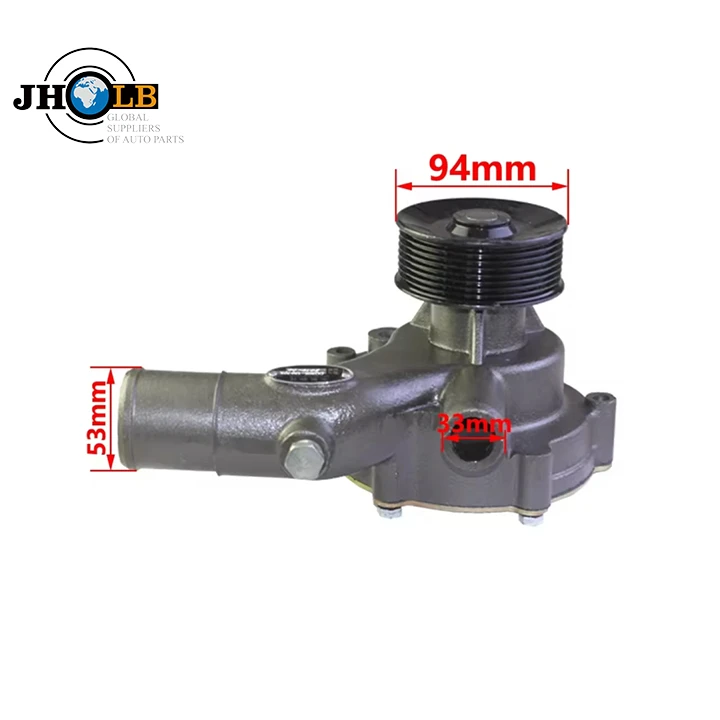
For example, we offer Original Factory Quality Water Pump OEM Parts Compatible with Daewoo Opel Chevrolet: AW5057 96351969 1334010 1334025 1334065 1334098 90234198 90392901 93278547 90144227 90325660 90349239 9192793 R1160012 — Fits Matiz/Corsa/Spark Models | Precision Fit | Fast Shipping. These pumps are engineered to provide optimal performance and durability, with features such as precision fit and fast shipping.
We also offer Original Water Pump OEM EQ465iL1307010 | Compatible with Chevrolet N200/DFSK/FAW/Changan | Premium Replacement for Diesel Engines, which are designed to meet the demanding requirements of diesel engines. These pumps are made from high-quality materials and are built to last, ensuring reliable operation and long service life.
Contact Us for Your Water Pump Needs
If you're in the market for a water pump or need assistance with NPSH calculations and system design, we're here to help. Our team of experienced engineers and technicians can provide you with expert advice and support to ensure that you select the right pump for your application and that your pumping system operates efficiently and reliably.
Contact us today to discuss your water pump requirements and to learn more about our products and services. We look forward to working with you!
References
- Karassik, I. J., Messina, J. P., Cooper, P. T., & Heald, C. C. (2008). Pump Handbook. McGraw-Hill.
- Stepanoff, A. J. (1957). Centrifugal and Axial Flow Pumps: Theory, Design, and Application. Wiley.