

What Is Cylinder Head?
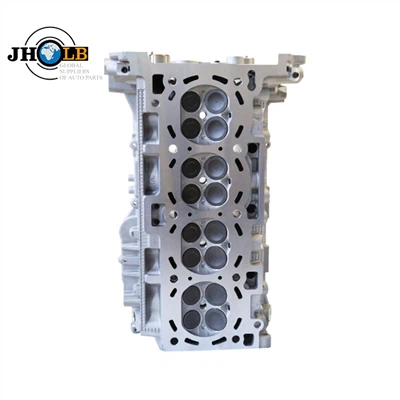
A cylinder head is usually located on the top of the engine block. It serves as a housing for components such as the intake and exhaust valves, springs and lifters and the combustion chamber. The head is a simple plate of metal containing the spark plugs and possibly heat dissipation fins.
Advantages of Cylinder Head
Easy To Manufacture
Cylinder heads involve simple components and are easy to manufacture, unlike other components and parts of an engine.
Alterable
You can change the thickness of the gasket that seals a cylinder head to an engine block, thus altering the compression ratio. This allows manufacturers to optimise an engine's performance.
Easy To Maintain
A cylinder head involves straightforward maintenance processes. You may easily decarbonise them to remove carbon buildup. Besides, the valve grinding process to firmly seal the cylinder head to valves is relatively simpler.
-

HYUNDAI And KIA Cylinder Head Cover Complete And Only G4K...
OEM 221002G550Complete and OnlyHYUNDAI and KIA Cylinder Head CoverG4KJ G4KHfor Santafe, ix45HYD 2.0T and 2.4GDI Add to Inquiry -
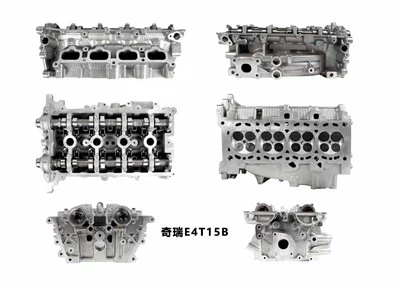
Cylinder Head Cover Complete And Only Chery EE4T15B Gasol...
Chery EE4T15BComplete and OnlyCylinder Head CoverGasoline 4 Cylinders 1.5T VVTfor Arrizo 5 sport Tiggo 7 sport Add to Inquiry -
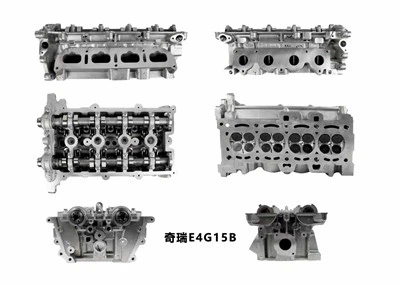
Cylinder Head Cover Complete And Only Chery E4G15B Gasoli...
Complete and OnlyCylinder Head CoverChery E4G15B Gasoline 4 Cylinders 1.5L VVTfor Arrizo 5 Tiggo 3x Tiggo 4pro Add to Inquiry -
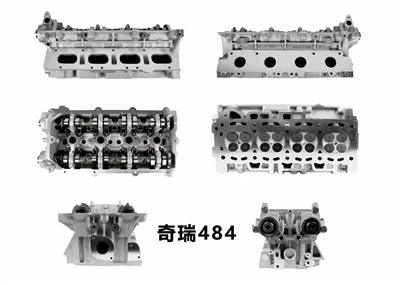
Cylinder Head Cover Complete And Only Chery SQR484F Gasol...
Complete and OnlyCylinder Head CoverChery SQR484F Gasoline 4 Cylinders 2.0Lfor A5 Eastar Tiggo 3 Eastar Cross Tiggo5 Riich G5 Add to Inquiry -
Cylinder Head Cover Complete And Only Chery SQR481F Gasol...
Chery SQR481FComplete and OnlyCylinder Head CoverGasoline 4 Cylinders 1.6Lfor Banner-Cloud Tiggo Eastar Arrizo Riich Add to Inquiry -
"Chery Genuine OEM Complete Cylinder Head Cover Assembly ...
Complete and OnlyCylinder Head CoverChery SQR477Ffor Banner-Cloud (05-10) A5 (05-10) Fulwin2 (09-12) 1.5L Add to Inquiry -
HYUNDAI And KIA Cylinder Head Cover Complete And Only G4F...
HYUNDAI and KIA Cylinder Head Cover Complete and Only G4FJ G4FD OEM 221002B705 for Verna, Celesta,K2 HYD 1.6T and 1.6L DVVT Add to Inquiry -
HYUNDAI And KIA Cylinder Head Cover Complete And Only G4K...
HYUNDAI and KIA Cylinder Head Cover Complete and Only G4KG OEM 221002C050 for Starec HYD 2.4L Add to Inquiry -
HYUNDAI And KIA Cylinder Head Cover Complete And Only G4L...
HYUNDAI and KIA Cylinder Head Cover Complete and Only G4LA G4LC OEM 221000350022 for Verna, Pegas HYD 1.2L and 1.4L Add to Inquiry -
HYUNDAI And KIA Cylinder Head Cover Complete And Only G4N...
HYUNDAI and KIA Cylinder Head Cover Complete and Only G4NC OEM 221002E270 for Tucsun HYD 2.0L Add to Inquiry -
HYUNDAI And KIA Cylinder Head Cover Complete And Only G4N...
HYUNDAI and KIA Cylinder Head Cover Complete and Only G4NA G4NE New OEM 221002E000 for Sportage, K4, K5, ix35, Mistra, Sonata8 HYD 2.0L Add to Inquiry -
HYUNDAI And KIA Cylinder Head Cover Complete And Only G4N...
HYUNDAI and KIA Cylinder Head Cover Complete and Only G4NA G4NE OEM 221002E000 for Sportage, K4, K5, ix35, Mistra HYD 1.8L and 2.0L Add to Inquiry


Why Choose Us
Our Factory
Liubei engine factory, located in jinhua, zhejiang, is a leading global provider of automotive power solutions. Since its establishment, we have been committed to designing, manufacturing, and providing innovative, reliable, and efficient engine products, contributing to the development of the automotive industry
One-stop Solution
Strive to build the best one-stop auto parts service platform in china, make auto parts services easier, go further, achieve customers,and achieve ourselves
Advanced Equipment
Our factory is equipped with the most advanced production equipment and automated production lines:
High precision cnc machine tools and machining centers
Intelligent assembly line and robot system
Advanced detection and testing equipment
Environmentally friendly manufacturing process
The application of these devices and technologies ensures that our products reach industry-leading levels in terms of quality, performance, and reliability
Quality Control
We have implemented a comprehensive quality management system, from raw material inspection to final product testing, and every process undergoes strict quality control. Our engine products comply with international standards and have passed multiple rigorous certifications and tests.
Customized Services
We provide personalized accessory recommendations and customization services to ensure that the accessories you choose perfectly match your vehicle model and usage needs
Types of Cylinder Head
Flathead cylinder heads:
These cylinder heads feature a simple flat design with valves positioned beside the cylinders rather than on top. While their construction is straightforward, flathead designs suffer from inefficiencies in airflow and combustion due to their inherent design limitations. The positioning of valves beside the cylinders restricts airflow into and out of the combustion chamber, leading to reduced power output and fuel efficiency.
Overhead valve (ohv) cylinder heads:
Ohv cylinder heads, also known as pushrod engines, represent a significant advancement over flathead designs. In ohv engines, the valves are positioned above the combustion chamber and are operated by pushrods and rocker arms. This configuration allows for improved airflow and combustion efficiency compared to flathead designs. By placing the valves above the combustion chamber, ohv engines can utilize larger intake and exhaust ports, facilitating better airflow into and out of the cylinders. Pushrods and rocker arms enable the engine to achieve higher valve lift and duration, further enhancing performance.
Overhead camshaft (ohc) cylinder heads:
Ohc cylinder heads represent the pinnacle of cylinder head design and are favored in high-performance and modern engines. Unlike ohv engines, ohc engines place the camshaft(s) directly above the cylinders, eliminating the need for pushrods. This configuration allows for precise valve timing control and enables the engine to achieve higher rpms, resulting in enhanced performance. By eliminating the need for pushrods, ohc engines can have fewer moving parts, reducing weight and complexity. Additionally, ohc engines typically feature multiple camshafts, allowing for separate control of intake and exhaust valves, further optimizing engine performance and efficiency.
Single cylinder head:
Engines featuring a single-cylinder head typically incorporate a straightforward design where all cylinders are housed within one unit. This arrangement is prevalent in engines with fewer cylinders, such as four or six-cylinder configurations. All intake and exhaust ports are integrated into this single head, whether arranged in a straight line or v-formation. This simplicity makes single-cylinder head setups economical to produce and maintain, often favored in smaller vehicles and applications where space and weight are critical factors.
Dual cylinder heads:
In contrast, engines equipped with dual cylinder heads utilize two separate units, with each head responsible for a bank of cylinders. This configuration is commonly encountered in larger engines with more cylinders, including v6 and v8 layouts. Airflow management is optimized by having separate heads for each cylinder bank, enhancing engine performance and efficiency. The dual head setup allows for more precise tuning of intake and exhaust systems, contributing to improved power delivery and smoother operation.
Opposed cylinder heads:
Opposed cylinder engines, also known as flat or boxer engines, employ a unique arrangement where cylinder heads are positioned opposite each other on either side of the crankshaft. This design achieves exceptional balance and compactness, characteristics highly desirable in specific applications such as aircraft and certain automotive designs. The arrangement of cylinders in opposition leads to a reduced center of gravity, enhancing the stability and maneuverability of the vehicle. Additionally, the layout lends itself well to air-cooling, simplifying engine cooling systems.
Application of Cylinder Head
Commercial vehicles and heavy machinery
Due to the larger combustion scale, heavy-duty commercial vehicles and machinery cylinders must withstand higher pressures and temperatures. Durability and robustness are prioritized in these applications to ensure longevity and reliability, which are essential in industries like construction and transportation.
Generators and irrigation pumps
Generators and irrigation pumps require reliability over extended periods of operation. Cylinder heads in these machines are designed to ensure consistent performance, focusing on maintaining power output and fuel efficiency even under strenuous conditions.

Components of Cylinder Head
Cylinder Block:
The cylinder is the part that supports the structure of the engine cylinders and their related parts. It is the lower part of the engine cylinder.
Cylinder Head Gasket:
It is set up or mounted between the engine block and cylinder head, it established the seal between the two components.
The cylinder head gasket provides the functions of coolant in applicable passageways. It is used to prevent air and combustion gas leakage, and to keep the compression of the engine cylinder.
Piston:
It is a disc that reciprocates inside the cylinder at the time of the combustion process of the engine.
Its main work is to transfer the energy by acquiring the impulse which is being generated from the gas inside the cylinder and transferring the energy from the connecting rod to the crankshaft.
Camshaft:
It has the function to push the valve open in the cylinder head. Camshaft means a shaft that has a cam along with the shaft. The camshaft presses the valve with proper timing so it is made in established conditions so the crankshaft rotates. A camshaft helps an engine to work well.
Valves:
It is also called a door between the combustion chamber and outside air.
It acts as a gate because the function of the valve is as a place of exit material. Generally, two valves are used on a 4-stroke engine, to handle suction and exhaust.
Valve Spring:
It has a function to hold the valve position concerning to close tightly. A valve spring is used to regain the manifold position after being pressed. It is pointed in a down position with the spring.
Spark Plugs:
A spark plug fire the electricity inside the combustion chamber, with the help of a spark plug engine, and runs efficiently because of the position of the spark plug at the top point that’s why the resultant energy pushes the piston directly.
Injector:
For different types of engines, different ignition methods are employed. In diesel engines, the injector directly leads to the combustion chamber so it does not need spark plugs.
Intake Manifold:
In this intake manifold air comes from the air induction system which is a tubular part.
Material of Cylinder Head
Iron
These are made from a block of cast iron. The material offers several benefits. Cast iron cylinder heads are easy and less costly. They are also sturdy owing to the material’s superior strength. Iron also withstands higher temperatures well, which is one of the requirements for cylinder head material properties.
Aluminum
They are more lightweight and do not add an unnecessary load to the engine. The heat conductivity of aluminum is also higher, which helps prevent localized hotspots and greatly helps with cooling.
Other advantages of aluminum heads include the material’s ability to sustain higher temperature levels. That means higher combustion temperatures, and reduced nox emissions from the exhaust.
Composite
The advent of composite materials like carbon fiber and reinforced plastics has unlocked fresh opportunities for enhancing cylinder head design and optimizing performance. While still relatively uncommon in automotive applications, composite cylinder heads offer compelling advantages, particularly in weight reduction and design flexibility. Carbon fiber, renowned for its exceptional strength-to-weight ratio, enables engineers to create intricate and lightweight cylinder head designs that maximize efficiency and performance.
How to Clean a Cylinder Head
Remove The Cylinder Head: Detach it from the engine block, following your vehicle’s specific procedures.
Inspect For Damage: Look for cracks or warping that might require professional repair.
Scrape Off Deposits: Use a plastic scraper to remove carbon deposits and old gasket material.
Soak In A Cleaning Solution: Submerge the head in a degreaser or cleaning solvent to dissolve grime.
Brush and rinse
Use a brush to scrub stubborn areas, then rinse with water and dry thoroughly.
Check and clean valves
Clean the valves separately, ensuring they are free of deposits.
Reassemble carefully
Follow the manufacturer’s guidelines to reassemble and torque the head correctly.
The Core Functions Of Cylinder Heads
Sealing The Combustion Chamber
The primary cylinder head function is to seal the combustion chamber, where the fuel-air mixture is ignited to produce power. This sealing prevents the combustion gasses from escaping and ensures that the maximum energy is converted into mechanical motion. The integrity of this seal directly influences the machine’s efficiency and power output.
Facilitating Airflow And Fuel Delivery
These heads feature channels that allow fuel and air to flow into the combustion chamber and exhaust gasses to exit. The efficiency with which a cylinder head manages these flows significantly impacts performance. Improved airflow helps improve combustion and enhances power and fuel economy. Such precise design of these pathways is critical for optimizing the engine’s breathing efficiency, directly influencing its overall output and efficiency.
Heat Dissipation
The heads are exposed to extreme heat from combustion. They are typically made from cast iron or aluminum, chosen for their ability to dissipate heat effectively. This heat management is critical for maintaining an optimal operating temperature and preventing overheating, which can lead to severe damage.
Mounting Critical Components
Cylinder heads mount essential components such as spark plugs, valves, and camshafts. The arrangement and operation of these components within the cylinder head influence various aspects of performance. This includes valve opening and closing timing, which affects emissions and fuel efficiency.
How the Cylinder Head Works
The cylinder head closes off the top of the cylinders to form the combustion chambers. The spark plugs protrude through the cylinder head into the combustion chambers to spark ignition. Opening into the cylinders are the valves.
An intake valve opens to allow a mixture of fuel and air into each cylinder before closing again. The piston moves up inside the cylinder to compress the air/fuel mixture. The spark plug ignites the compressed fuel.
And, as the piston moves away from the cylinder head because of the rapidly expanding gases caused during combustion, the exhaust valve opens to allow the gases to exit the engine. The cam shaft makes sure that all of this activity happens in the right timing.
Our Factory
Liubei engine factory, located in jinhua, zhejiang, is a leading global provider of automotive power solutions. Since its establishment, we have been committed to designing, manufacturing, and providing innovative, reliable, and efficient engine products, contributing to the development of the automotive industry.
We firmly believe that the engine is the heart of a car, driving every journey. Our mission is to provide excellent engine products and services to global customers through continuous technological innovation and process improvement, while committed to environmental sustainability.


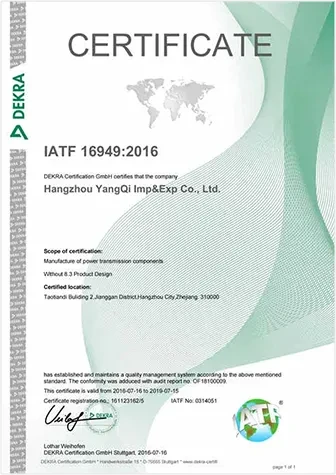
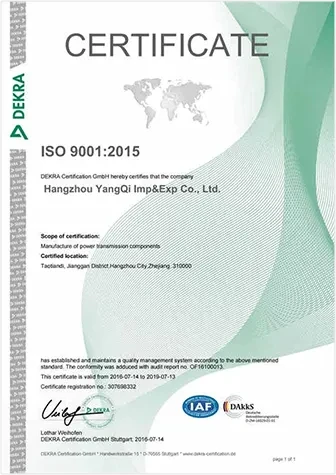
Our Certificate
Our company has become one of the most competitive companies in the field of automotive engine parts, and has obtained iso/ts16949:2009 quality system certification.

FAQ
As one of the leading cylinder head manufacturers and suppliers in China, we warmly welcome you to buy high-grade cylinder head in stock here from our factory. All auto parts are with high quality and competitive price.
96642709, Cylinder Head Nissan Pathfinder, 4061003009