

What Is Crankcase?
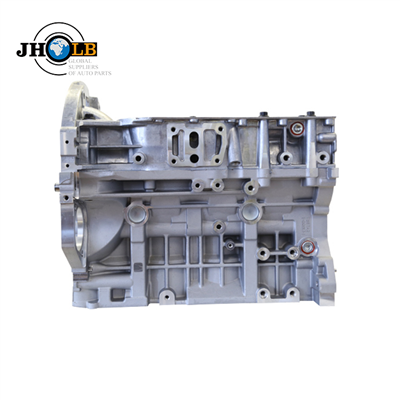
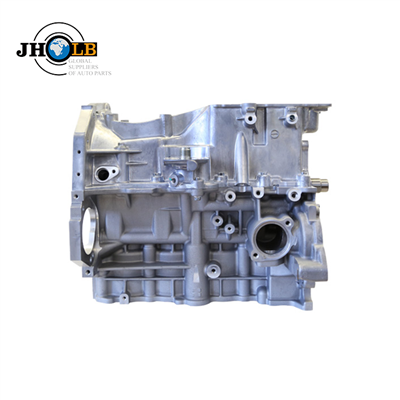
Within an engine, the main component is the crankcase. The crankcase is, essentially, the casing for the whole crankshaft mechanism within the internal combustion engine. Whilst the engine ancillaries and the transmission/gearbox are attached to the perimeter of the crankcase, it holds all of the crank mechanism parts, including; the pistons, connecting rods, and cylinders.
Advantages Of Crankcase
The crankcase serves as a protective enclosure, safeguarding the connecting rod and crankshaft from potential contamination and damage.
01
It effectively blocks the ingress of debris, preventing it from reaching the critical crankshaft and connecting rod components.
02
In intricate engine designs, the crankcase plays a vital role in facilitating the circulation of oil, ensuring proper lubrication.
03
It functions as a pressurisation chamber, aiding in the management of the fuel-air mixture within the engine.
04
This essential engine component establishes a sealed environment, effectively shielding the rotating elements from moisture and dirt infiltration.
05
-

HYUNDAI And KIA Engine Short Block G4KJ G4KH OEM 2T01T2GA...
HYUNDAI and KIA engine short block G4KJ G4KH OEM 2T01T2GA01D for New Santafe, Sorento HYD 2.4L Add to Inquiry -
HYUNDAI And KIA Engine Short Block G4KG OEM 203QM2CA03A F...
HYUNDAI and KIA engine short block G4KG OEM 203QM2CA03A for Starec HYD 2.4L Add to Inquiry -
HYUNDAI And KIA Engine Short Block G4LA G4LC OEM 21102039...
HYUNDAI and KIA engine short block G4LA G4LC OEM 2110203960 for Verna, Pegas HYD 1.2L and 1.4L Add to Inquiry -
HYUNDAI & KIA Genuine OEM Engine Short Block G4NC (211022...
HYUNDAI and KIA engine short block G4NC OEM 211022E063 for Tucsun HYD 2.0L Add to Inquiry -
HYUNDAI & KIA Genuine OEM Engine Short Block G4NA/G4NB (2...
HYUNDAI and KIA engine short block G4NA G4NB OEM 211022E000 for Sportager, K4, K5, ix35, Mistra HYD 1.8L and 2.0L Add to Inquiry -
HYUNDAI & KIA Genuine OEM Engine Short Block G4KD (211022...
HYUNDAI and KIA engine short block G4KJ G4KH OEM 211022GH00 for Santafe, ix45 HYD 2.0T and 2.4L GDI Add to Inquiry -
HYUNDAI & KIA Genuine OEM Engine Short Block G4KD (211022...
HYUNDAI and KIA engine short block G4KD OEM 211022GA02 for ix35, Sportage HYD 2.0L Add to Inquiry -
HYUNDAI & KIA Genuine OEM Engine Short Block Assembly G4K...
HYUNDAI and KIA engine short block G4KE OEM 211022GB02 for Sorento, ix35 HYD 2.4L Add to Inquiry -
HYUNDAI & KIA Original Engine Short Block G4FG OEM 211022...
HYUNDAI and KIA engine short block G4FG OEM 211022BB00 for Elantra, K3 HYD 1.6L DVVT Add to Inquiry -
Original Hyundai & Kia G4FD Engine Short Block OEM 211022...
HYUNDAI and KIA engine short block G4FD OEM 211022BB11 for Elantra HYD 1.6L DVVT Add to Inquiry -
Hyundai & Kia G4FJ Engine Short Block OEM 211022BB00 – Pe...
HYUNDAI and KIA engine short block G4FJ OEM 211022BB00 for Verna, Celesta,K2 HYD 1.6T Add to Inquiry -
「HYUNDAI & KIA Genuine Short Block Engine G4FA/G4FC (OE# ...
HYUNDAI and KIA engine short block G4FA G4FC OEM 211022BB06 for Verna, Celesta,K2, Forte HYD 1.4L and 1.6L Add to Inquiry




Why Choose Us
Our Factory
Liubei engine factory, located in jinhua, zhejiang, is a leading global provider of automotive power solutions. Since its establishment, we have been committed to designing, manufacturing, and providing innovative, reliable, and efficient engine products, contributing to the development of the automotive industry
One-stop Solution
Strive to build the best one-stop auto parts service platform in china, make auto parts services easier, go further, achieve customers,and achieve ourselves
Advanced Equipment
Our factory is equipped with the most advanced production equipment and automated production lines:
High precision cnc machine tools and machining centers
Intelligent assembly line and robot system
Advanced detection and testing equipment
Environmentally friendly manufacturing process
The application of these devices and technologies ensures that our products reach industry-leading levels in terms of quality, performance, and reliability
Quality Control
We have implemented a comprehensive quality management system, from raw material inspection to final product testing, and every process undergoes strict quality control. Our engine products comply with international standards and have passed multiple rigorous certifications and tests.
Customized Services
We provide personalized accessory recommendations and customization services to ensure that the accessories you choose perfectly match your vehicle model and usage needs
Types of Crankcase
Dry Crankcase:
A dry crankcase is a type of engine design where the crankshaft and connecting rods operate in an enclosed space that is entirely separate from the engine's lubrication system. In this setup, oil is not present in the crankcase, and lubrication is achieved through oil pumps and channels that deliver oil directly to critical engine components. Dry crankcases are commonly found in many modern automotive engines, offering advantages in oil control and reduced internal friction.
Wet Crankcase:
In contrast to a dry crankcase, a wet crankcase incorporates oil directly into the crankcase housing. The crankshaft, connecting rods, and other moving parts are partially submerged in oil, providing continuous lubrication and cooling. This design is often seen in two-stroke engines, small gasoline engines, and some older automotive engines. While it simplifies lubrication, it can lead to oil contamination and increased internal drag.
Semi-wet Crankcase:
A semi-wet crankcase strikes a balance between the dry and wet designs. In this configuration, the crankshaft and connecting rods partially dip into an oil reservoir, which ensures adequate lubrication without submerging the entire assembly. Semi-wet crankcases are seen in various engines, including some motorcycles and recreational vehicles, offering the benefits of both wet and dry designs.
Closed Crankcase:
A closed crankcase refers to an engine design where the crankcase is sealed and isolated from the environment. This closed system prevents the release of engine emissions into the atmosphere, making it environmentally friendly. Closed crankcases are common in modern, emission-compliant automotive engines, helping reduce pollution and meet stringent environmental standards.
Open Crankcase:
An open crankcase design allows the engine's interior to be in direct contact with the surrounding atmosphere. While this setup simplifies engine construction and cooling, it can result in the release of unburned hydrocarbons and emissions into the air, making it less environmentally friendly. Open crankcases are typically found in older engines and some small equipment engines.
Components of Crankcase


Upper Crankcase: The upper crankcase constitutes the upper section of the crankcase assembly. It houses the camshaft and valve mechanism, featuring bores for inlet and exhaust manifolds, where valves and valve sheets are positioned.
Camshaft: The camshaft connects to the crankshaft through belt or chain drives.
Lower Crankcase: The lower crankcase directly secures the engine block using bolts. It serves as the foundation for the engine's crankshaft, providing support while being continuously lubricated and cooled by the circulating oil.
Crankshaft Mounting: Thrust bearings ensure the crankshaft remains securely in place, preventing movement. One end of the crankshaft carries the dead load, distributing oil as it rotates inside the crankcase.
Valve: It is positioned at the bottom part of the crankcase. The valve serves as an oil drain, facilitating the flow of oil when opened, allowing it to drain due to gravity.
Function of a Crankcase
The crankcase stands at the heart of the engine, providing shelter for the entire crank mechanism, including pistons, cylinders, and connecting rods. Additionally, it serves as the anchor point for various accessories, the transmission/gearbox, the engine control system, and the cylinder head, all connected to the crankcase.
A fundamental and consistent role of the crankcase is safeguarding the crankshaft and connecting rods, effectively shielding them from potentially damaging debris. In simpler two-stroke engines, the crankcase undertakes multiple functions, doubling as the pressurisation chamber for the fuel-air mixture.
In more intricate four-stroke engine designs, the crankcase is hermetically separated from the fuel-air mixture by the pistons. Instead, its primary function becomes the storage and circulation of oil, which is crucial for engine lubrication. Additionally, it plays a role in enhancing safety by preventing access to moving parts, albeit to a limited extent.
How to Maintain Crankcase
- Check the overall quality of oil whether it is clean or dirty with carbon particles.
- Check for any distinguished smell, if found, this could be because of bacterial contamination of oil. The smell is generally of rotten eggs.
- Check for any metal particles near the grating in the crankcase.
Check the condition and damage to the gratings.
Check for any bluish dark patches, this indicates that hot spots are caused by friction of insufficient lubrication.
Check cross head for any damages.
Check cross head guides for damages and marks.
Check the bed plate for any welding cracks etc.
Check any metal seen near the bearings coming out due to wiping.
Check for piping and any loose connections between them.
Check the locking wires and locking washers on bolts of stuffing box.
Process of Crankcase
The as cast, or unmachined, crankcase preferably includes substantially coaxial unfinished or unmachined bearing recesses in the bearing caps and the associated journal receiving portions.
The engine block or crankcase is then machined, preferably including finish machining of all exposed surfaces, such as the upper deck, the lower edges of the side walls and the joint faces and recesses of the bearing caps and journal receiving portions. The attaching openings in the caps and journal receiving portions are also machined at this time.
After the block or crankcase is completely machined, and possibly as part of the same machining process, the bearing caps are separated from the remainder of the crankcase and their associated journal receiving portions by cutting away, such as by sawing, the connecting portions securing the bearing caps to the remainder of the crankcase.
Finally, the bearing recesses of all the attached bearing caps and journal receiving portions are line bored to provide perfectly aligned cylindrical bearing openings which may be intended to receive bearing inserts or to act directly as bearings in appropriate circumstances.

How to Choose the Ideal Crankcase Oil Filter
Ensure that you are buying a high-quality crankcase oil filter.
Make sure that you completely understand the details about the product you are about to purchase.
Check what type of anti-drainback valve system the filter contains.
Inspect the material of the core, ensuring that it will be strong enough to endure extreme pressure.
Finally, evaluate the quality of the other filter parts, including the base plate, gasket, and other miscellaneous hardware items that come with the product.
How to Replace the Crankcase Oil Filter
01/
Look for the air filter housing to find the crankcase filter. Typically, you will see this in front of the engine bay’s O/S corner.
02/
Begin loosening the fasteners that hold the air filter housing’s cover. Remove the cover, then use a clean cloth to remove any residue.
03/
You can now remove the air filter housing. However, before you do this, take note of the air filter’s position inside the housing.
04/
Take a couple of minutes to clean the air filter housing thoroughly. Doing so will ensure that car oil or dirt particles won’t transfer to the new crankcase filter. You might also need to clean the housing’s interior and ensure that there are no dirt particles or debris stuck inside.
05/
Locate the crankcase filter, then remove the retaining clip on it. In general, the crankcase filter is inside the air filter housing. Once you’ve removed the plastic housing and the filter, you can now take out the old crankcase. However, before you mount the new crankcase filter, compare it with the old one, ensuring that they are the same.
06/
Once you’ve placed the new crankcase filter, you can fasten the retaining clips. After that, you can replace the filter and the plastic housing. Now, put the filter back in, ensuring that it is in the same position as when you removed it. Attach the air filter’s housing cover, then screw the nuts back in place.
Causes of a Clogged Crankcase Filter
If your crankcase filter is clogged, it might be due to the following:
Engine oil
Engine oil can become thick and sludgy when it’s old or contaminated, which clogs the crankcase filter.
Dirt and debris
The crankcase filter traps debris to prevent it from contaminating the oil. The dirt builds up over time, eventually clogging the filter.
Carbon deposits
Carbon deposits are a result of incomplete fuel combustion. They create a wall of black soot that hardens and blocks the passageway.
Condensation
Moisture can build up in the crankcase filter, especially if the engine often runs at low temperatures. It tends to mix with other contaminants, which clogs the filter.
Our Factory
Liubei engine factory, located in jinhua, zhejiang, is a leading global provider of automotive power solutions. Since its establishment, we have been committed to designing, manufacturing, and providing innovative, reliable, and efficient engine products, contributing to the development of the automotive industry.
We firmly believe that the engine is the heart of a car, driving every journey. Our mission is to provide excellent engine products and services to global customers through continuous technological innovation and process improvement, while committed to environmental sustainability.


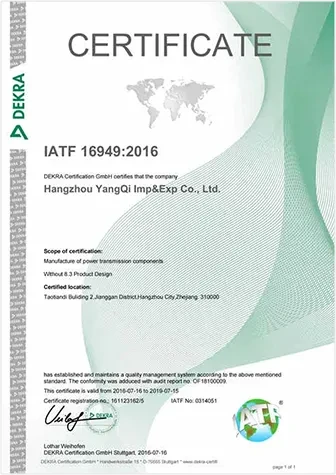
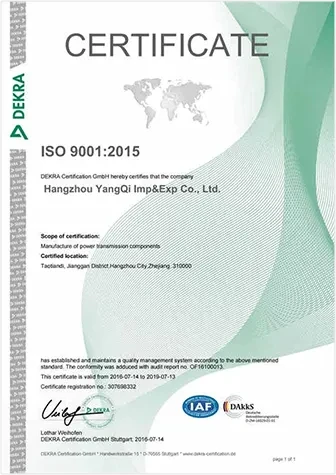
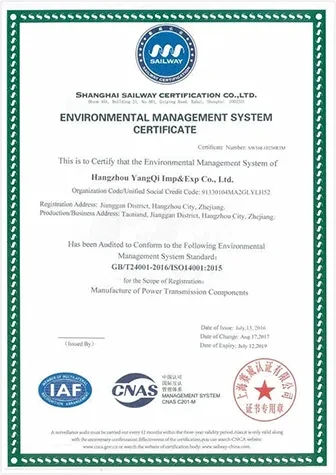
Our Certificate
Our company has become one of the most competitive companies in the field of automotive engine parts, and has obtained iso/ts16949:2009 quality system certification.
FAQ
As one of the leading crankcase manufacturers and suppliers in China, we warmly welcome you to buy high-grade crankcase in stock here from our factory. All auto parts are with high quality and competitive price.
engine