

What Is Camshaft?
A camshaft is a shaft that contains a row of pointed cams in order to convert rotational motion to reciprocating motion. On top of the cylinders above the engine.Camshafts are used in piston engines (to operate the intake and exhaust valves),mechanically controlled ignition systems and early electric motor speed controllers.
Advantages of Camshaft
Precise Valve Timing
The camshaft controls the opening and closing of the engine's intake and exhaust valves at specific intervals, known as valve timing. Precise valve timing ensures that the valves open and close at the right moments during the engine's four-stroke cycle, optimising combustion efficiency and power output.
Valve Lift Control
The shape and size of the cam lobes on the camshaft determine the valve lift. Higher cam lobe profiles result in greater valve lift, allowing more air and fuel to enter the engine, which can lead to increased engine power and performance.
Variable Valve Timing
Some modern engines use camshaft phasing or variable valve timing systems to adjust the camshaft's timing and control the valve events based on engine load and speed. VVT enhances engine efficiency, power, and emissions by optimising valve timing for different operating conditions.
Improved Exhaust Gas Flow
The camshaft also controls the timing of the exhaust valve, allowing for the timely expulsion of exhaust gases during the exhaust stroke. This efficient exhaust gas flow helps reduce back pressure and enhances engine performance.
Adaptability For Different Engine Designs
Camshafts can be designed to suit various engine configurations, such as overhead cam , dual overhead cam , or single overhead cam layouts, making them adaptable to different engine types.
-

Camshaft OEM WL84-12-420 WL31-12-420 WL51-12-420 for Mazd...
Camshafts are crucial components in internal combustion engines, controlling the operation of poppet valves by rotating at high speeds and causing vibrations. They are designed to open and close Add to Inquiry -
Toyota 2C & 3C Camshaft - Genuine OEM 13511-64110 Direct ...
Camshafts typically consist of an outer shaft and an inner shaft, with cams mounted on these shafts. The outer shaft have functional elements rigidly arranged on it, while the inner shaft carries Add to Inquiry


Why Choose Us
Our Factory
Liubei engine factory, located in jinhua, zhejiang, is a leading global provider of automotive power solutions. Since its establishment, we have been committed to designing, manufacturing, and providing innovative, reliable, and efficient engine products, contributing to the development of the automotive industry
One-stop Solution
Strive to build the best one-stop auto parts service platform in china, make auto parts services easier, go further, achieve customers,and achieve ourselves
Advanced Equipment
Our factory is equipped with the most advanced production equipment and automated production lines:
High precision cnc machine tools and machining centers
Intelligent assembly line and robot system
Advanced detection and testing equipment
Environmentally friendly manufacturing process
The application of these devices and technologies ensures that our products reach industry-leading levels in terms of quality, performance, and reliability
Quality Control
We have implemented a comprehensive quality management system, from raw material inspection to final product testing, and every process undergoes strict quality control. Our engine products comply with international standards and have passed multiple rigorous certifications and tests.
Customized Services
We provide personalized accessory recommendations and customization services to ensure that the accessories you choose perfectly match your vehicle model and usage needs
Types of Camshaft
Flat Tappet Cam:
Flat tappet cams have slightly crowned faces and operate with lifters that rotate on the lobes.These cams feature small tapered lobes and require the lifter to follow the lobe to prevent excessive wear.They are less massive and lighter than roller tappets and are cost-effective.
Roller Cams:
Roller cams utilise rounded tips to hold valves open at high lift, affecting fuel-air mixture requirements.The lobe shape allows for quicker valve opening.Roller cams reduce internal friction, enable aggressive cam profiles, favour high rpms, and have a virtually unlimited service life.They can be reused multiple times, reduce friction, increase power, and extend longevity.
Cylindrical Cam:
Also known as barrel or drum cam, these cylindrical cams have grooves on their surfaces for cam follower motion.The cam's axis aligns with the follower's direction of movement.
Radial Cam:
Radial cams have axes perpendicular to the follower's motion and use irregular contour plates to convert the motion to the cam follower or driven member.
Conjugate Cam:
These cams incorporate two rollers linked to the follower or driver to limit each other's movements, reducing noise for quiet operation.Suited for applications requiring silent camshaft operation.
Globoid Cam:
Similar to cylindrical cams, but replace cylindrical surfaces with concave or convex assemblies.
Spherical Cam:
Spherical cams have grooves on their curved surfaces, with a spherical shape.Follower motion is vertical to the cam's rotational axis.
Translating Cam:
These cams have grooved contour plates, causing follower members to oscillate along the cam groove surface.
Heart-shaped Cam:
Heart-shaped cams feature an asymmetrical heart-shaped design with smooth and continuous follower motion.Commonly used for winding cable around solenoids.
Wedge Cam:
Wedge cams have a pointed end and a wide base, allowing sliding movement relative to the cam.
Spiral Cam:
Spiral cams have a semi-circular contour with a groove on the surface, and follower movement is perpendicular to the linear motion of the driver member on the camshaft.
Application of Camshaft


Automotive Engineering
Camshaft systems in internal combustion engines use cams and followers to control the opening and closing of valves, optimizing engine performance. The application of cam and follower knowledge in automotive engineering encompasses critical aspects of engine operation, fuel delivery, transmission, suspension, and braking systems.
Manufacturing Processes
Camshafts are employed in machinery for precise cutting, shaping, and forming processes, ensuring accuracy in manufacturing.
Robotics
Robotic systems often utilize camshaft for controlled and precise movement in various applications, such as pick-and-place operations.
Textile Industry
Camshafts are crucial in textile machinery for creating intricate patterns and designs in fabrics during the manufacturing process.
Components of Camshaft
Driveshaft:
This is the part of the camshaft that provides motion to the whole assembly is called a drive shaft. A drive shaft is either connected to the crankshaft with a belt or is operated independently. In most cases, it is connected with the crankshaft.
Shaft:
The supporting structure which holds all the other components is called a shaft. It is designed to withstand high fatigue loads when the engine is running.
Bearings:
Bearings are very important elements of it as it holds the shaft in the correct position and also reduces frictional losses during the operation of the camshaft. It is also provided with an oil inlet for a constant oil change in the camshaft.
Cam:
Cams are the main parts of the assembly. A cam is so designed that it keeps the valves closed all the time and opens it by pushing it at the right moment. A cam and follower set are discussed later in the article.
Lobes
The main working of lobes is to open and close the valves for intake and exhaust gases. The speed of the lobe depends on the current engine speed.
Thrust plate
As you can see in the diagram the thrust plate is on the right side and it is attached between the cam and timing gear. The thrust plate is mounted on the front cover for proper end play.
Chain sprocket
It is attached to one end of the camshaft in a combustion engine. This sprocket, along with the timing belt and the crankshaft sprocket, is responsible for maintaining the timing between camshaft and crankshaft.
Material of Camshaft
Hardenable Iron
This material falls under grade 17 cast iron and it also consists of about 1% chrome to produce a range of 5-7% carbide. Hardenable iron can serve as a substitute for steel camshafts. It is applicable in areas where there is an overflow of oil.
Chilled Chrome Cast Iron
It also contains 1% chrome, like hardenable iron. This material is more compatible with the casting process of manufacturing camshafts and is suitable for manufacturing high-quality and large quantities of ohc operating camshafts. However, it’s more expensive than the other types of cast iron, it has strong resistance to unfavorable conditions.
Carbon Steel (En8/en9)
It is applicable for producing roller camshafts and hardened camshafts because of its excellent properties and hardened attributes.
Nitriding Steel (En 40b)
En 40b is the best option for camshafts. It is the steel version of chilled iron known for its hard surface finish and is one of the few lightweight automotive part materials.
How to Maintain Camshaft
Proper camshaft care and maintenance ensure smooth and efficient engine functioning. It also ensures optimal engine performance, longevity, and reliability throughout the engine's life. Some key steps to help car owners maintain their engine's camshaft effectively include the following:
- Regular inspections
Keep the engine clean
Proper and regular lubrication
Check timing components regularly
Address performance issues promptly
Avoid over-revving the engine
Seek professional maintenance
Process of Camshaft
Designing the blueprint
The journey of manufacturing a camshaft begins with meticulous planning and design. Engineers analyse the engine's specifications, performance requirements, and desired characteristics to create a blueprint that outlines the camshaft's profile, lobes, and timing. Advanced computer-aided design (CAD) software is often employed to model and simulate the camshaft's behaviour under different operating conditions, allowing for fine-tuning before the manufacturing process commences.
Material selection
Selecting the right material is crucial for ensuring the durability and performance of the camshaft. Common materials used include alloy steel, cast iron, and even high-performance alloys like billet steel or ductile iron for racing applications. Factors such as strength, wear resistance, and machinability are carefully considered during material selection to meet the specific requirements of the engine and application.
Machining the blank
With the blueprint and material selected, the manufacturing process kicks off with the machining of the raw material into a blank, which serves as the foundation for the camshaft. Advanced Computer Numerical Control machines are employed to precisely shape the blank according to the design specifications, including the contours of the lobes, journals, and keyways.
Grinding the lobes
One of the most critical steps in camshaft manufacturing is the grinding of the lobes. This process involves using specialised CNC grinding machines equipped with high-precision grinding wheels to accurately shape the camshaft lobes to the desired profiles and surface finish. The camshaft's performance and efficiency heavily rely on the precise geometry and surface quality of these lobes, making this step a key determinant of overall engine performance.
Heat treatment
To enhance the mechanical properties and durability of the camshaft, heat treatment is often employed. This process involves subjecting the camshaft to controlled heating and cooling cycles to modify its microstructure and achieve the desired hardness, strength, and toughness. Heat treatment methods such as induction hardening or carburizing are employed based on the material and performance requirements.
Surface treatment
In addition to heat treatment, surface treatments such as nitriding or coatings may be applied to further enhance the camshaft's wear resistance and longevity. These treatments create a hardened surface layer that withstands the harsh operating conditions within the engine, reducing friction and minimising wear on the camshaft lobes and journals.
Quality assurance
Before the camshaft is deemed ready for installation, rigorous quality assurance measures are implemented to ensure it meets the highest standards of performance and reliability. Dimensional inspection, surface finish analysis, and functional testing are conducted to verify that the camshaft conforms to the design specifications and performs flawlessly under real-world conditions.
Final assembly
Once the camshaft passes all quality checks, it is ready for final assembly into the engine. Skilled technicians meticulously install the camshaft, ensuring proper alignment and timing with the engine's crankshaft and valvetrain components. Proper installation is crucial for optimising engine performance, fuel efficiency, and emissions control.
How the Camshaft Works
Installation
The camshaft is positioned inside the engine block and is supported by bearings. It runs parallel to the crankshaft and is driven by the engine's timing mechanism, which can be a timing belt, timing chain, or gears.
Lobes
There are several lobes, each corresponding to a specific valve in the engine. The number and shape of these lobes depend on the engine's design and the number of valves it has. In a typical four-stroke engine, you'll find one lobe for each intake valve and one lobe for each exhaust valve.
Valve Lifters And Followers
The camshaft lobes press against valve lifters (also known as tappets) or cam followers (also called rocker arms). These components are in contact with the engine valves. The lifters or followers transfer the motion from the camshaft to the valves.
Valve Timing - Intake Stroke
As the engine rotates and the camshaft turns, a lobe responsible for the intake valve approaches the corresponding valve lifter or follower. The lobe's shape is designed to lift the lifter or follower, causing the intake valve to open at the right moment during the engine's intake stroke.
Valve Opening - Intake Stroke
When the intake valve opens, the engine's piston moves down, creating a low-pressure area inside the cylinder. This allows the air-fuel mixture to be drawn into the cylinder from the intake manifold.
Valve Timing - Compression Stroke
After the intake stroke, the camshaft continues to rotate. The intake valve closes due to the shape of the cam lobe, sealing the combustion chamber.
Valve Timing - Power Stroke
As the engine piston moves up during the compression stroke, another cam lobe corresponding to the exhaust valve approaches its lifter or follower. This lobe lifts the lifter, opening the exhaust valve at the right time.
Valve Opening - Exhaust Stroke
With the exhaust valve open, the burnt fuel-air mixture is expelled from the cylinder and pushed into the exhaust manifold as the piston moves down during the power stroke.
Valve Timing - Exhaust Stroke
After the power stroke, the exhaust valve closes due to the camshaft's rotation, sealing the exhaust port.
Repeating The Cycle
The camshaft continues to rotate, repeating this process for each cylinder in the engine. This series of events happens rapidly, coordinating the intake and exhaust valve timings for optimal engine performance.
Our Factory
Liubei engine factory, located in jinhua, zhejiang, is a leading global provider of automotive power solutions. Since its establishment, we have been committed to designing, manufacturing, and providing innovative, reliable, and efficient engine products, contributing to the development of the automotive industry.
We firmly believe that the engine is the heart of a car, driving every journey. Our mission is to provide excellent engine products and services to global customers through continuous technological innovation and process improvement, while committed to environmental sustainability.


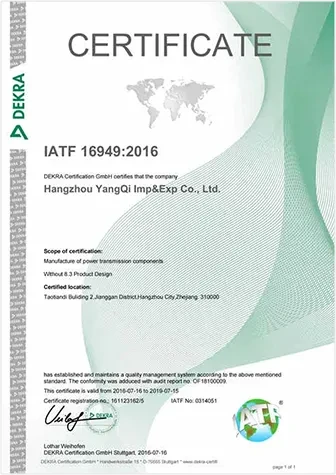
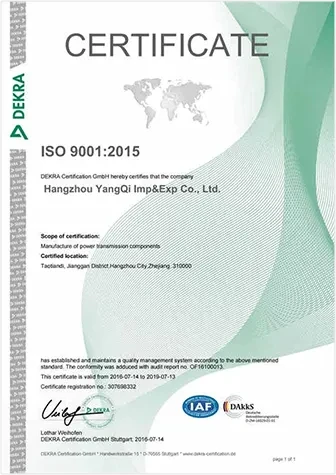
Our Certificate
Our company has become one of the most competitive companies in the field of automotive engine parts, and has obtained iso/ts16949:2009 quality system certification.

FAQ
As one of the leading camshaft manufacturers and suppliers in China, we warmly welcome you to buy high-grade camshaft in stock here from our factory. All auto parts are with high quality and competitive price.
sustainable valves, manufacturing process valves, warehouse valves