

In the intricate world of internal combustion engines, two fundamental parameters play a pivotal role in determining an engine's performance: the crankshaft stroke and the bore. As a seasoned crankshaft supplier, I've witnessed firsthand how these two elements interact to shape an engine's power, efficiency, and overall characteristics. In this blog post, I'll delve into the differences between the crankshaft stroke and the bore, exploring their individual functions and how they work together to create a well - balanced engine.
Understanding the Bore
The bore refers to the diameter of the cylinders in an engine. It is essentially the width of the circular opening within which the piston moves up and down. A larger bore means a wider cylinder, which allows for a larger piston head. This, in turn, has several implications for engine performance.
When the bore is increased, the surface area of the piston head in contact with the combustion gases is greater. This results in a larger force being applied to the piston during the power stroke, as more gas is pushing against a larger area. As a consequence, engines with a larger bore can potentially produce more power, especially at high RPMs. This is because the increased force on the piston can be translated into greater torque and horsepower.
However, a larger bore also comes with some drawbacks. One of the main issues is that it can lead to increased heat loss. With a larger surface area exposed to the hot combustion gases, more heat is transferred to the cylinder walls, which can reduce the engine's efficiency. Additionally, larger pistons and cylinders require more precise engineering and manufacturing to ensure proper sealing and smooth operation.
Deciphering the Crankshaft Stroke
The crankshaft stroke, on the other hand, is the distance that the piston travels from the top - dead - center (TDC) to the bottom - dead - center (BDC) in the cylinder. It is determined by the design of the crankshaft, specifically the throw of the crankshaft. The throw is the distance between the center of the main journal (where the crankshaft is supported in the engine block) and the center of the connecting rod journal (where the connecting rod attaches to the crankshaft).
A longer crankshaft stroke means that the piston travels a greater distance within the cylinder. This results in a larger displacement volume, as the volume of the cylinder is calculated based on the bore diameter and the stroke length. Engines with a longer stroke typically have more torque at lower RPMs. This is because the longer distance the piston travels allows for a more complete expansion of the combustion gases, providing a stronger push on the piston.
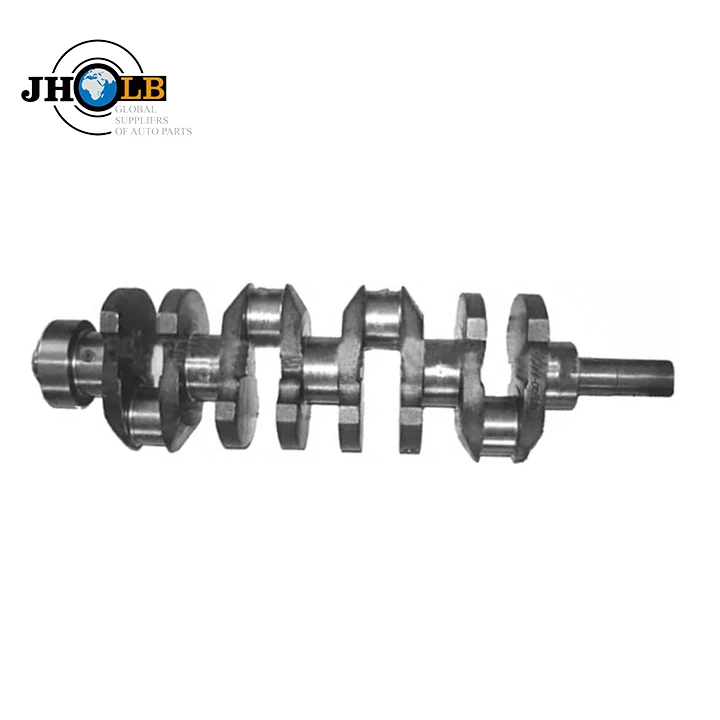

But a longer stroke also has its limitations. Engines with a long stroke tend to have a lower redline (the maximum RPM at which the engine can safely operate). This is because the pistons have to travel a greater distance in a shorter amount of time at high RPMs, which can lead to increased stress on the engine components, such as the pistons, connecting rods, and crankshaft.
The Relationship Between Bore and Stroke
The relationship between the bore and the stroke is often expressed as the bore - to - stroke ratio. This ratio can have a significant impact on an engine's performance characteristics.
- Square Engines: When the bore and the stroke are equal, the engine is considered a square engine. Square engines offer a good balance between power and torque across a wide range of RPMs. They are often used in a variety of applications, from daily - driven cars to some performance vehicles, as they provide a versatile combination of performance and efficiency.
- Under - Square Engines: In an under - square engine, the stroke is longer than the bore. These engines are known for their high torque output at low RPMs, making them ideal for applications where pulling power is important, such as trucks and some off - road vehicles. However, they may not be as powerful at high RPMs compared to other engine designs.
- Over - Square Engines: An over - square engine has a bore that is larger than the stroke. These engines are designed to produce more power at high RPMs. They are commonly found in sports cars and high - performance motorcycles, where quick acceleration and high - speed performance are crucial.
Real - World Examples of Bore and Stroke in Different Engines
Let's take a look at some real - world examples to better understand how the bore and stroke affect engine performance.
For instance, consider the Toyota Vios 2002 - 2008 & Yaris 2006 - 2016 OEM Crankshaft (13401 - 22030, 13401 - 22040, 13401 - 21020, 13401 - 21030, 13401 - 0C010) for 1.5L Diesel Engines (3ZZ/4ZZ/1NZ/2NZ/1AZ/1AZ - FE/2NZ - FE). The design of the crankshaft and the bore - stroke ratio in these engines are carefully engineered to provide a balance of power and fuel efficiency. The specific bore and stroke dimensions are optimized to meet the requirements of these compact cars, which need to offer decent performance while also being economical to run.
Another example is the OEM Crankshaft 13401 - 54XXX for Toyota Vigo Hilux/HiAce/Land Cruiser/Prado J90 (Compatible with 3L - E/5L - E Engines). These engines are often used in heavy - duty vehicles, where torque is of utmost importance. The crankshaft stroke is likely to be relatively long compared to the bore, allowing these engines to generate the high levels of torque needed for towing and hauling.
The Importance of Bore and Stroke in Engine Tuning
Engine tuners often manipulate the bore and stroke to achieve specific performance goals. For example, if a tuner wants to increase the power output of an engine at high RPMs, they may opt to increase the bore while keeping the stroke relatively short. This will result in an over - square engine with a higher bore - to - stroke ratio, which is better suited for high - speed performance.
Conversely, if the goal is to improve low - end torque, the tuner may increase the stroke or keep the engine under - square. This will ensure that the engine has more pulling power at lower RPMs, which is beneficial for applications such as off - road driving or towing.
As a Crankshaft Supplier
As a crankshaft supplier, we understand the critical role that the crankshaft stroke plays in engine performance. Our team of experts is well - versed in the design and manufacturing of crankshafts with different stroke lengths to meet the diverse needs of our customers. Whether you are looking for a crankshaft for a high - performance sports car or a heavy - duty truck, we have the knowledge and experience to provide you with the right product.
We also recognize the importance of the bore - stroke relationship. Our crankshafts are designed to work in harmony with the engine's bore dimensions to ensure optimal performance. We use advanced manufacturing techniques and high - quality materials to produce crankshafts that are not only durable but also precise in their operation.
Contact for Procurement
If you are in the market for a high - quality crankshaft for your engine, we invite you to reach out to us for procurement and further discussions. Our team is ready to assist you in finding the perfect crankshaft solution for your specific requirements. Whether you need a standard OEM crankshaft or a custom - designed one, we can work with you to meet your needs.
References
- Heywood, J. B. (1988). Internal Combustion Engine Fundamentals. McGraw - Hill.
- Taylor, C. F. (1966). The Internal Combustion Engine in Theory and Practice. MIT Press.