

Hey there, fellow engine enthusiasts! As an engine supplier, I've been in the thick of the engine game for quite a while. One topic that keeps coming up in our discussions with customers is the engine compression ratio. So, I thought I'd take a deep dive into what the significance of engine compression ratio is and why it matters to you.
First off, let's break down what the engine compression ratio actually is. Simply put, it's the ratio of the volume of the combustion chamber when the piston is at the bottom of its stroke (bottom dead center) to the volume when the piston is at the top of its stroke (top dead center). For example, if the volume at bottom dead center is 100 cubic centimeters and the volume at top dead center is 10 cubic centimeters, the compression ratio is 10:1.
Now, you might be wondering, "Why does this ratio matter?" Well, the compression ratio has a huge impact on several key aspects of an engine's performance.
Power and Efficiency
One of the most significant effects of the compression ratio is on the engine's power output and fuel efficiency. A higher compression ratio means that the air-fuel mixture is compressed more tightly before ignition. This leads to a more powerful explosion when the spark plug fires, which in turn translates into more power being produced by the engine.
Think of it like a slingshot. The more you pull back the slingshot (compress the mixture), the farther and faster the pebble (power) will fly when you release it. Higher compression ratios can also improve fuel efficiency because they allow the engine to extract more energy from the same amount of fuel.
However, there's a catch. If the compression ratio is too high, it can cause a problem called "knocking" or "pinging." This happens when the air-fuel mixture ignites prematurely, before the spark plug fires. Knocking can damage the engine over time and reduce its performance. That's why engine manufacturers have to find the right balance when designing an engine.
Emissions
The compression ratio also plays a role in reducing emissions. A higher compression ratio can lead to more complete combustion of the air-fuel mixture. When the mixture burns more completely, there are fewer unburned hydrocarbons and other pollutants released into the atmosphere. This is great news for the environment and for meeting strict emission standards.
Fuel Requirements
The compression ratio affects the type of fuel an engine can use. Engines with higher compression ratios generally require higher-octane fuel. Octane is a measure of a fuel's resistance to knocking. Higher-octane fuel can withstand higher compression without igniting prematurely. So, if you have an engine with a high compression ratio, you'll need to use premium fuel to avoid knocking.

Real-World Examples
Let's take a look at some real-world examples of how compression ratios can vary and their effects.
For instance, many modern gasoline engines have compression ratios in the range of 10:1 to 13:1. These engines offer a good balance of power, efficiency, and emissions. Some high-performance engines, like those in sports cars, can have compression ratios as high as 14:1 or even higher. These engines are designed to produce maximum power, but they also require premium fuel.
On the other hand, diesel engines typically have much higher compression ratios, usually in the range of 16:1 to 22:1. Diesel engines don't use spark plugs to ignite the fuel. Instead, the high compression ratio heats the air in the combustion chamber to a temperature high enough to ignite the diesel fuel when it's injected. This is why diesel engines are known for their high torque and fuel efficiency.
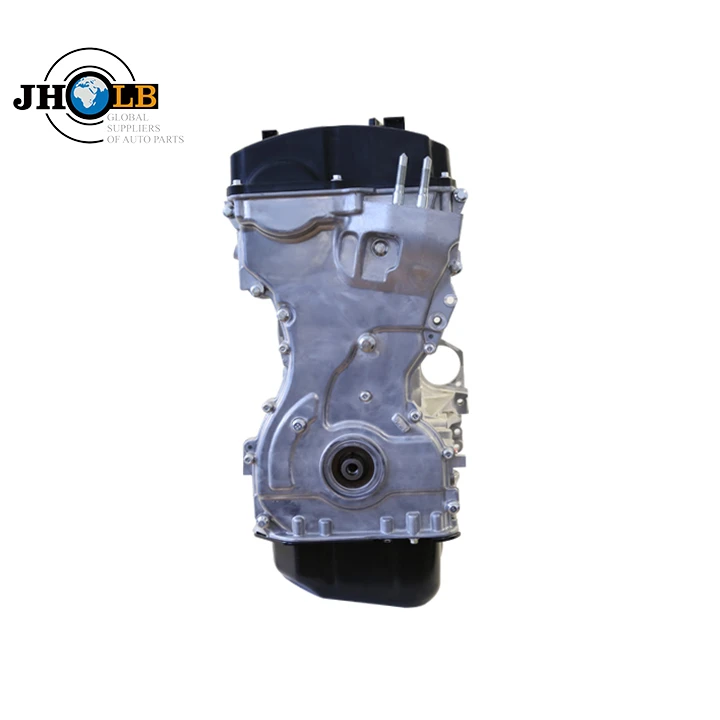
If you're in the market for a replacement engine or engine parts, we've got you covered. We offer a wide range of high-quality engines and components. For example, check out our HYUNDAI & KIA G4KE Engine Long Block (211012GB00) – OEM-Quality Replacement for Sorento/Ix35 2.4L | Precision-Matched OEM Standards, High-Performance Assurance. It's a great option if you need a reliable replacement for your Hyundai or Kia vehicle.
We also have the Toyota Corolla & Camry 2.0L/2.2L Diesel Engine OEM Cylinder Head - 11101-64132, 11101-64390 (Fit 2C/2C-TE/3C Engines) - Genuine Replacement Part. This cylinder head is designed to meet the exact specifications of your Toyota engine, ensuring optimal performance.
And if you're looking for a gearbox, our The Modern G4HC Gearbox Is Suitable For The Hyundai Atos MPV 1.0L/Picanto 1.0L is a great choice. It's built to last and provide smooth shifting.
Conclusion
In conclusion, the engine compression ratio is a crucial factor in an engine's performance, efficiency, emissions, and fuel requirements. Whether you're a car enthusiast looking to upgrade your engine or a mechanic in need of high-quality replacement parts, understanding the significance of the compression ratio can help you make informed decisions.
If you have any questions about engine compression ratios or our products, don't hesitate to reach out. We're here to help you find the right engine solutions for your needs. Whether you're looking to improve your vehicle's performance or just need a reliable replacement part, we've got the expertise and the products to get the job done. So, let's start a conversation and see how we can work together to meet your engine needs.
References
- Heywood, J. B. (1988). Internal Combustion Engine Fundamentals. McGraw-Hill.
- Taylor, C. F. (1966). The Internal Combustion Engine in Theory and Practice. MIT Press.